

Franchising buys you control at the price of a permanent support and compliance operation. Licensing trades that control for low cost and high brand exposure. Channel partnerships sit between them, scaling commercial reach without locations. The comparison breaks down what each model grants, costs and risks, then maps nine common constraints to the model that fits them. One warning runs through all of it, since an arrangement you call a license can still be a franchise in a regulator’s eyes, and the FTC has enforced against exactly that.
Eventually, most growing companies encounter the same problem. The product works and customers are happily buying. But you can’t keep up with the demand you’ve created or reach the places it’s coming from.
From there, three paths open up. Franchising lets other people run your operation under your brand. Licensing lets other companies pay to use your brand or technology while they do the operating. Channel partnerships let other companies sell your product as your commercial partner.
Each one gets you into the new market. Each one also costs something different to run, carries a different amount of risk, and hands someone else a different amount of control over your name. This guide walks through what each model is, where each one breaks, and how to choose based on the constraint your business actually has.
The three models, defined
If you want to grow through other people’s businesses, you have three different ways to do it. Each option puts your product or brand in front of customers through a company you don’t own. The difference between franchise and license and partners ultimately comes down to how much control you want to keep when someone else is doing the work of selling your product, running a location, or building on your brand.

Franchising
Franchising means handing over your entire playbook of operational guidelines. A franchisee pays you an initial franchise fee and ongoing royalties, then runs a location built to your exact specifications. That includes your signage, your training manual, your pricing guidance, your marketing materials, and your quality control standards. They’re buying into an established brand rather than building one from scratch.
You control the operation because you wrote it, but that control is also what triggers regulation. A business that dictates how its operators operate carries disclosure obligations, and in some US states, registration, that a plain contract seller doesn’t. Both the franchisor and the franchisee take on obligations under that arrangement.
In the US, prospective franchisees must receive a franchise disclosure document at least 14 days before they sign or pay anything, one that discloses fees, obligations and financial performance where the franchisor provides it. Here’s an example of one:

The businesses choosing this trade aren’t a handful of legacy brands. US franchising is projected to generate $921.4B in economic output across roughly 845,000 establishments in 2026. Think coffee chains, fitness studios, home services brands. These are businesses where the customer experience must be identical in every city, which is why franchising is often the only model that delivers it.
For the managed version of this world, see our guide to dealer portals and dealer relationship management.
Licensing
Licensing is the opposite trade. You own an asset, a brand, a technology, a piece of intellectual property, and you grant someone the right to use it for a fee or royalty. You control the quality of what carries your name, but not how the licensee runs its business. Your involvement stays light, and so does your say in day-to-day execution.
Unlike franchising, a licensing deal covers the asset alone. Business licensing models typically take the form of a trademark license or a technology license, and they exist because the owner wants to monetize trademarks or patents without operating anyone else’s business. You control the quality of what carries your brand, not how the licensee runs its business.
Licensing spans everything from movie studios renting their characters to toy makers to software firms licensing their tech to hardware manufacturers. Global retail sales of licensed products and services hit $369.6B in 2024, then grew 5.45% to $389.8B in 2025, outpacing overall retail growth.
Licensing fits when your asset is valuable enough to rent out and you’re comfortable letting someone else’s judgment shape how it’s used.
Channel partnerships
The channel partnership model is the software industry’s default. Independent businesses sell, resell, implement, or refer your product as part of their own business. They’re compensated through margin, commission or fees.
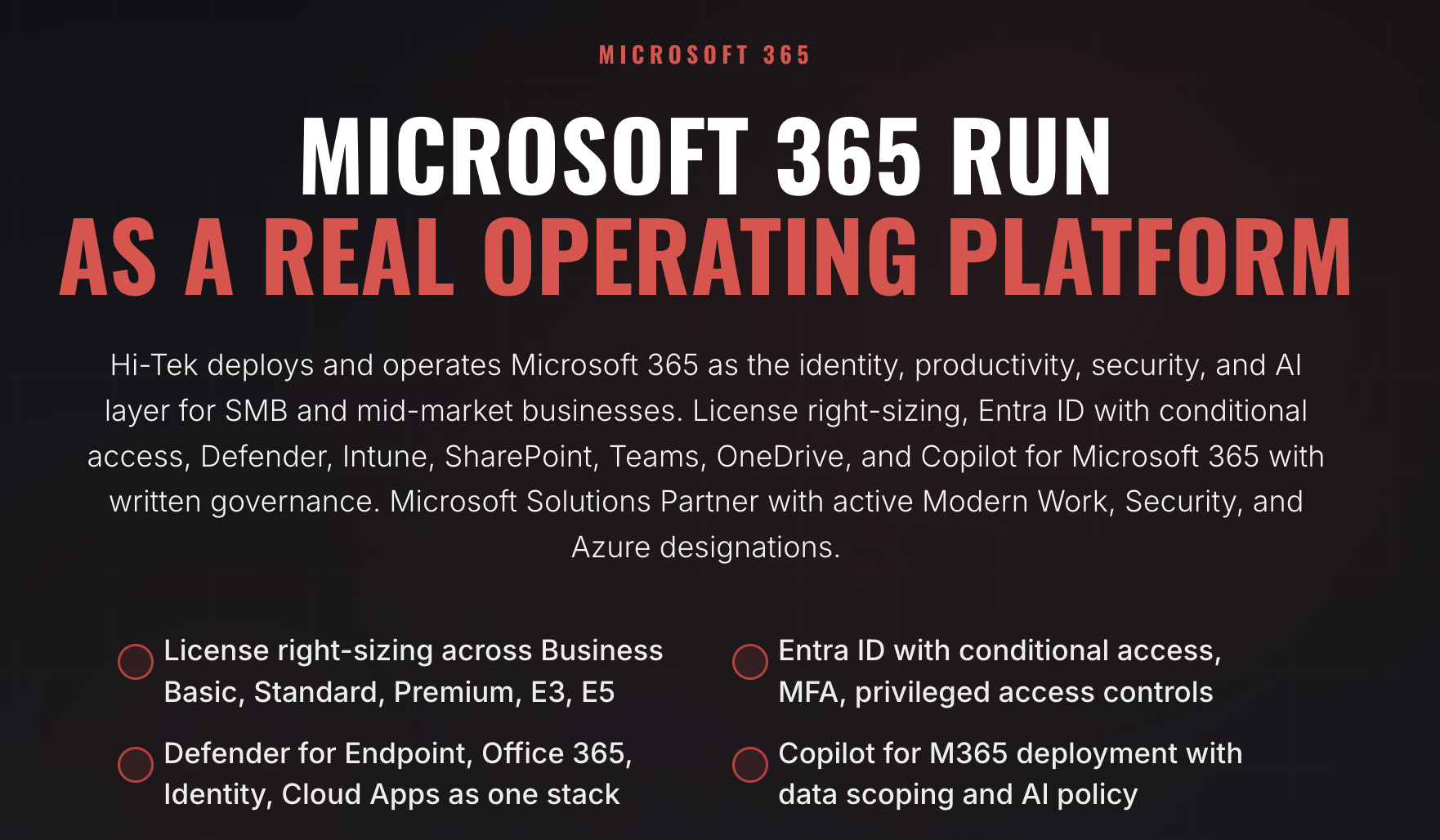
About 70% of worldwide IT spending flows through partner-delivered channels. Channel partnerships can look like managed service providers (like Hi-Tek) bundling Microsoft 365 with their own support contracts or systems integrators implementing Salesforce for enterprise clients.
You set the commercial terms and the partner runs their own program. They sell products to their own buyers. If your product is delivered digitally and customers don’t need a physical location to buy it, this is almost always the model that fits. The purest version is a white-label software partner program, where partners sell your product as their own.
Comparing licensing vs franchising vs partner program side by side
In short, franchising controls the operation, licensing controls the asset, and channel partnerships control the commercial terms. Here’s how else the three models differ side by side.
| Franchising | Licensing | Channel partnerships | |
|---|---|---|---|
| What you grant | Brand, system and operating method | Rights to use an asset | The right to sell or deliver your product |
| Control over delivery | High and enforceable | Low | Moderate, through terms and enablement |
| Typical revenue | Initial fee plus ongoing royalties | License fee or royalty | Margin, commission or referral fees |
| Regulatory burden | Heavy, with disclosure and registration in many places | Light, mostly contractual | Light, mostly contractual |
| Your ongoing obligation | Substantial: training, support, standards, field visits | Minimal | Moderate: enablement, support, partner management |
| Setup cost and time | High, often a year or more | Low | Moderate |
| Brand risk | Managed through standards you can enforce | Highest, you have least say in execution | Moderate, managed through terms and tiering |
| Best suited to | Repeatable location-based operations | Brand and technology IP | Software and B2B products |
As you can see, each model dominates a different territory.
Franchising wins in physical, location-based services, where the customer experience must be identical whether the customer walks into a store in Seattle or Chicago.
Licensing wins in brand and technology IP, where the value lives in what you own rather than how a location runs.
Channel partnerships win in software and B2B products, where customers buy digitally and the partner’s existing relationships and expertise close deals you couldn't reach alone.
The trap: When a license is legally a franchise
This section uses US rules as an example. Franchise law varies by country and, in the US, by state.

One of the most expensive mistakes you can make in this space is calling an arrangement a license when a regulator deems it something else. In many jurisdictions, whether an arrangement is a franchise depends on what it actually does, not on what the contract calls it.
If the deal combines use of your brand with control over, or significant help with, how the other party operates and a payment to you for the arrangement, regulators, courts, or the other party can treat it as a franchise.
If an arrangement gets reclassified as a franchise, it can carry disclosure and registration obligations the business never prepared for. The consequences of missing them can be serious, from contract rescission to penalties. In October 2024, the FTC alleged that a coffee franchise had labeled its California franchisees “licensees” and given them no franchise disclosure document. The proposed settlement required the company to notify operators that they could rescind their contracts without penalty.
For anyone weighing the legal considerations behind a deal like this, the lesson is that the label on the contract decides very little. So what pushes a licensing arrangement toward franchise territory? It comes down to how much control you exercise, or how much help you give, over the way they run their business. These behaviors tend to matter according to US federal rules:
- Requiring partners to complete your certification or training program before they can operate
- Approving or prescribing how they market your product
- Setting their pricing or dictating their operating procedures
- Charging ongoing fees tied to the use of your brand on top of the control above
None of these is a legal test, and none of them automatically makes an arrangement a franchise. Whether it does depends on your jurisdiction and the specific facts of the arrangement, and definitions vary between them. But if you’re adding any of these to a licensing arrangement, that’s the moment to take advice, before you sign, not after.
Channel programs aren’t automatically outside franchise rules either. A program that charges partners required fees, licenses your brand, and controls how they operate can raise the same questions.
⚠️ This section isn’t legal advice, and the distinction between a license and a franchise turns on facts a blog post can’t evaluate. If your arrangement involves brand use, operational control and payment all at once, get a lawyer who knows franchise law in your jurisdiction before you structure anything.
How to choose
The right model is usually the one that matches the constraint you can’t escape, not the one that looks most attractive on paper. A founder with no support staff can’t run franchising no matter how much they like the control. A vendor whose product ships digitally has no reason to replicate a location. Find your hard constraint in the left column below, and the right column gives you your answer.
| If this is true | Lean toward | Why |
|---|---|---|
| The customer experience must be identical everywhere | Franchising | Franchising is the model built for charging operators to follow your playbook |
| Your business is a repeatable local operation | Franchising | Operators pay you to replicate a proven playbook |
| You want revenue from your brand or IP with little involvement | Licensing | You collect fees for an asset without operating anyone's business |
| You cannot support operators day to day | Licensing or channel partnerships | The operator's business stays theirs, so your obligation stays contractual |
| Your product is software and delivery is not location-based | Channel partnerships | Reach scales without locations, and less regulated overhead |
| You want to reach new markets without new entities | Channel partnerships | Partners bring the local presence you'd otherwise build |
| You need to move this quarter | Channel partnerships | Commercial contracts sign in weeks, franchise systems take a year or more |
| Brand consistency is the whole product | Franchising, and budget for the burden | Standards enforce consistency, but enforcement costs training, field visits and support staff |
| You have no capacity to enable anyone | Licensing, with modest expectations | Little required from you means little say in how the asset gets used |
Keep in mind that these models aren’t mutually exclusive. A business can license its brand in one market, franchise in another and run channel partners for a product line, and many do. Decide per market and per product rather than once for your whole company to properly make an informed decision.

What each model costs you to run
Setup cost is the smallest price you’ll pay. For a small business comparing the three, that distinction matters more, because the recurring load decides whether the model still works in year three.

Franchising: The heavy, permanent load
With franchising, you’re paying for:
- Legal and compliance work
- Franchisee recruitment
- Training and certification
- Field support
- Brand enforcement
- Franchise support team
Most of that never shrinks. Every new franchisee multiplies the training and field-support burden, and the compliance work doesn’t pause between recruitment cycles. Regulators have enforced against arrangements that failed disclosure obligations. Compliance is an ongoing cost.
The money flows the other way too, since franchisees commonly pay $20,000 to $50,000 upfront in franchise fees, plus royalties of 5% to 9% of gross sales. But those figures only matter if the system supports enough operators to collect them from.
The tooling it needs: Compliance and disclosure tooling to keep filings current across jurisdictions.
Licensing: Light cost, carried risk
In comparison to franchising, licensing runs light. The ongoing work is:
- Contract management
- Royalty collection and auditing
- Brand monitoring
A children’s book publisher that licenses its characters to a toy maker isn’t running the toy factory, so it doesn’t staff for operations. Brand risk still lands on the publisher, though. A toy that breaks or fails a safety check still has the publisher’s characters on the box. You can set quality standards, approve samples, and audit the licensee under the contract, but you’re relying on those checks rather than day-to-day oversight. With licensing, the cost is low, but the exposure is yours to watch out for.
The tooling it needs: Contract and royalty management to track who owes what.
Channel partnerships: Cost that scales with partner count
Channel partnerships land in between, and the cost scales with how many partners you run. The ongoing work is:
- Partner recruitment
- Onboarding
- Enablement
- Deal registration
- Conflict management
- Commission calculation and payout
- Headcount management
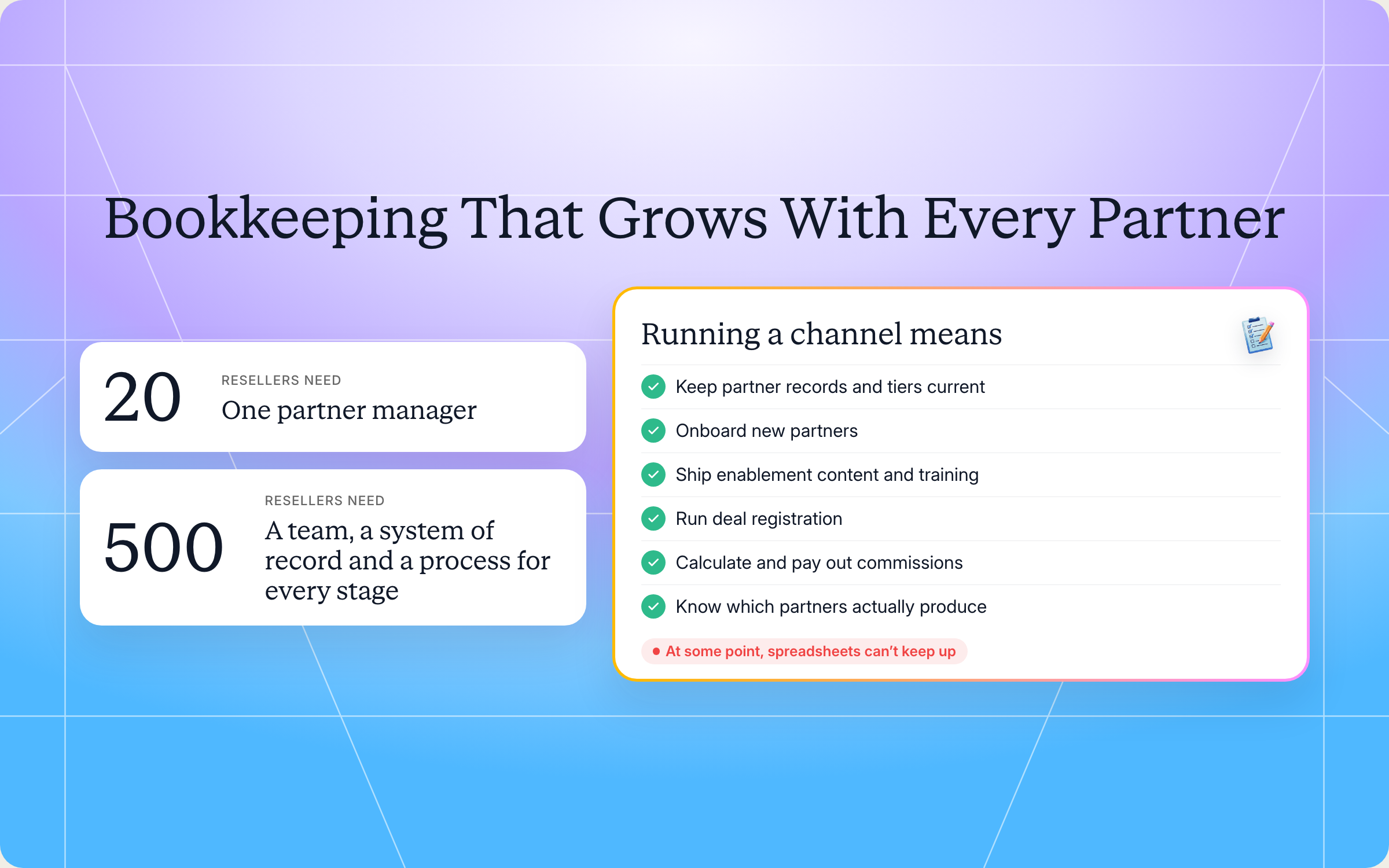
A software vendor with 20 resellers can run a program with just one partner manager. A vendor with 500 needs a team, a system of record, and a process for every stage of the partner lifecycle. Every cost adds up as your program scales.
The tooling it needs: Partner management software to run records, deal registration and payouts.
If you choose channel partnerships
Once you decide the channel route is the best fit for your operations, you have a few more questions to answer:
- Which partner types should you run?
- How are you going to structure margin?
- How will you manage partners once there are more than a handful?
Running a channel means keeping partner records and tiers current, onboarding new partners, shipping enablement content and training, running deal registration so two partners never fight over one deal, calculating and paying out commissions, and knowing which partners actually produce. All of these tasks are simply bookkeeping. But it’s bookkeeping that grows with every partner you sign. At a certain point, spreadsheets can’t keep up.
This is the problem Introw solves. Introw runs partner management on top of HubSpot or Salesforce, so partner-sourced revenue reports alongside direct revenue. It’s AI-native and headless, meaning partner workflows can be driven through AI assistants like Claude or ChatGPT instead of just through a portal. And Introw is built for enterprise teams running multi-tier partner programs, where the record-keeping described above spans hundreds of partners across regions.
If that matches your setup, book a demo and see it running on your own CRM.
Still curious? Here are some quick answers to help clear things up
A franchising agreement gives the franchisor control over how the operator runs the business operations, while a licensing deal only grants rights to a licensed asset, like a trademark or other intellectual property. The franchise model bundles the franchisor’s established brand with a proven system and ongoing support, and licensing hands over the asset alone. Franchising sells a way of running the business, and licensing sells the rights to one piece of it.
Yes, both to set up and to run. Franchising carries disclosure requirements, legal costs and a support organization that licensing avoids entirely. The higher fees show up in every renewal cycle, not just at signing. What you give up for the lower price is control and help, since the licensor doesn’t train you, check your sites, or enforce a playbook.
Yes, if brand use, significant control and required payments stack up in one arrangement, it can trigger franchise status under US federal law and state franchise laws. It doesn’t matter whether the contract calls itself a franchise vs a license. Definitions vary by jurisdiction and facts, so don’t take anything in this article as legal advice, and anyone structuring a deal like this should run it past a legal expert first.
A franchise partner runs a franchised business, one of many independently operated businesses operating under the franchisor’s brand identity and uniform systems. A channel partnership is a commercial relationship where a company sells another company’s product, common in software and B2B, and keeps its own brand and customers. The franchise partner replicates the whole operation, and the channel partner sells the product.
Franchising carries the heaviest recurring load, since royalties, marketing fees and administrative fees stack on top of the upfront franchise fee. Licensing runs lighter, with royalties on the licensed asset plus the cost of monitoring how the licensee uses your intellectual property rights. Channel partnerships cost you in enablement and management rather than in fees, and in all three the entry cost is the small number while the recurring cost decides whether the business arrangement supports your business goals.





See AI-Native PRM in Action
Book a demo with one of our partner program experts, or explore Introw on your own time.